
Fistula Treatment in Bareilly
Home > Fistula Treatment
Laparoscopic services
Other services
Fistula Treatment at Shubham Hospital
What is Fistula?
What are the symptoms of Fistula?
What causes Fistula?
How is Fistula diagnosed in Shubham Hospital?
At Shubham Hospital, Fistula is diagnosed through a physical examination and medical history review. Our experienced surgeons may also recommend diagnostic tests, such as an MRI or CT scan, to determine the exact location and extent of the Fistula.
At Shubham Hospital, we offer advanced surgical treatments for Fistula, including the latest minimally invasive procedures. These procedures are designed to promote healing, prevent complications, and reduce the risk of recurrence.
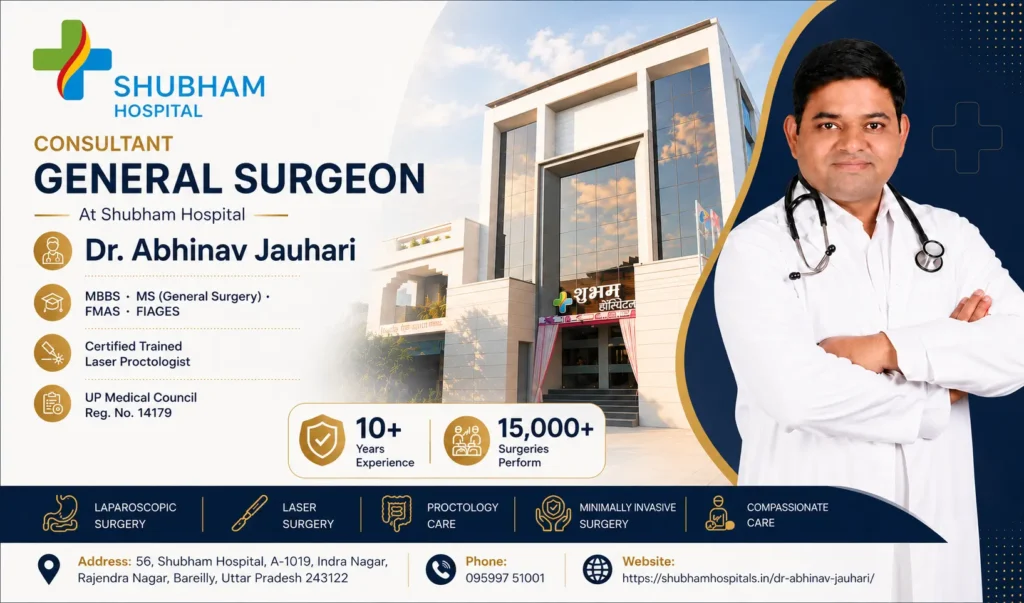
Some of the surgical treatments we offer for Fistula include:
Fistulotomy
Our treatments
Seton Placement
Our treatments
Fibrin Glue Injection
Our treatments
FAQs about Fistula Treatment
The recovery time varies depending on the surgical technique used and the extent of the Fistula. However, most patients can return to normal activities within a few days to a week after surgery.
Most patients are discharged on the same day or the following day after surgery. However, if complications arise, you may need to stay in the hospital for a longer period.
To prevent Fistula from recurring, it is essential to maintain healthy bowel habits, including eating a fiber-rich diet, drinking plenty of fluids, and avoiding constipation.
Like any surgical procedure, Fistula Surgery carries risks, including bleeding, infection, and damage to surrounding tissues. However, our experienced surgeons take all necessary precautions to minimize these risks.
In most cases, patients do not require a colostomy bag after Fistula Surgery. However, in rare cases where the Fistula is complex or extensive, a colostomy bag may be necessary temporarily.